The Robots Are Coming... To Code: A Web Developer's Guide to AI in 2026
The time of the monolithic, one-size-fits-all online presence is officially over. As we navigate 2025 and 2026, the widespread "AI vibe" in web building is a case of extreme customization. The impetus of the AI website generator is Artificial Intelligence, performing as a principal designer for every specific person who views a portal. This is not purely about embedding a individual's tag into a reception; it's about basically overhauling the material, capabilities, and design of a web platform in the moment to create a customized journey for an audience of a sole entity. This transition is democratizing premium site production and reshaping what it implies for a online platform to be authentically "user-centric."

Development for the Visitor: The On-the-fly Architecture
The enchantment of granular adaptation for the AI vibe coding tools commences far in the web property's foundation. Developers in 2025 are no longer creating inflexible journeys but are instead producing responsive structures where AI serves as a central dispatcher, assembling client interactions on the fly. This necessitates a transition away from hard-coded logic and toward a more fluid, dynamic approach of development.
Systematic Path Plotting and System
The most significant shift for the AI website coding is in how a client explores a website. Rather of following a static navigation plan, each customer's experience is computationally designed predicated on their personal record and live activity.
- Predictive Pathfinding: AI assesses a person's starting position, past purchases, and exploration behaviors to foresee their intent and dynamically reorders site directories and calls-to-action to display the most unimpeded journey to desired outcome.
- On-the-Fly Feature Toggling: An AI can assess a user's technical proficiency and adjust capabilities accordingly. For a expert client, it might expose complex sorting mechanisms, while for a first-timer, it might exhibit a uncomplicated, guided shopping experience.
- On-demand Content Components: The exact data of a webpage is no longer permanent. An AI can create product descriptions, updates, and even waivers from a database of components, adjusting the voice, span, and phrasing to connect with that distinct person.
The Adaptive UI: Layout That Adjusts and Foresees
The user interface is where this custom server-side comes to vitality. The "AI vibe" in presentation is about making a thinking display—an surface that doesn't just answer to selections but actively adapts to the visitor's situation, needs, and even unspoken intent. This represents the evolution from mobile-friendly structure to fully proactive aesthetics.
Context-Aware and Fluid Frontends
A platform's aesthetics and layout are no longer static blueprints. They are adaptive formations that restructure themselves established on a deep comprehension of the client's context.
- Environmental Adaptation: The display can transform significantly based on context. For a visitor using on a portable gadget on a clear weather, the webpage might autonomously toggle to a stark, anti-glare mode. For a user surfing late at after dark, it might utilize a dark mode with gentler, less bright shades.
- Conduct-Responsive Designs: The AI tracks how a visitor interacts with the layout. If a client habitually skips a aside, the AI might collapse it on their subsequent session and expand the primary information section, tuning the layout based on understood actions.
- Self-Adjusting Accessibility: AI can generate a really barrier-free digital world by mechanically modifying the journey. It can identify if a visitor is employing a text-to-speech tool and present a version of the site streamlined for auditory feedback, or amplify typeface magnitude and interactive regions for users who demonstrate characteristics of physical disabilities.
The Ultimate Balancer: Opening up Top-tier Online Construction
Perhaps the most impactful aspect of the AI vibe in 2026 is its role as a accessibility driver. The high-level, analytics-based customization that was historically the restricted area of big tech firms with enormous technical groups is now attainable to independent firms, makers, and individual creators. Cutting-edge AI-enabled solutions can now accept a straightforward enterprise overview and a vision statement and build a perfectly usable, attractively styled, and highly tailored web property, managing all parts from the development to the design. This enables people to direct attention on their idea and their customers, while the AI controls the intricate engineering implementation, leveling the cyber marketplace for every single one.
The Reasoning Tier: A Directory of Utilities for the AI-First Web
The "AI Vibe" of 2025-2026 is best comprehended as the implementation of an "intelligence layer" over the total online construction method. This level, driven by a modern class of refined applications, foresees demands, systematizes difficult chores, and provides imaginative options that were previously unimaginable. It is changing website creation from a succession of manual, technical stages into a more smooth, dialogue-based, and tactical pursuit. This registry emphasizes the crucial systems that constitute this new analytical overlay.
These systems are the most full articulation of the reasoning overlay, overseeing every tier of the online construction workflow from the archive to the presentation layer. They are actual "full-stack" answers, requiring only a solitary, top-level prompt to generate a comprehensive and live-ready virtual creation.
Mobirise AI Website Builder
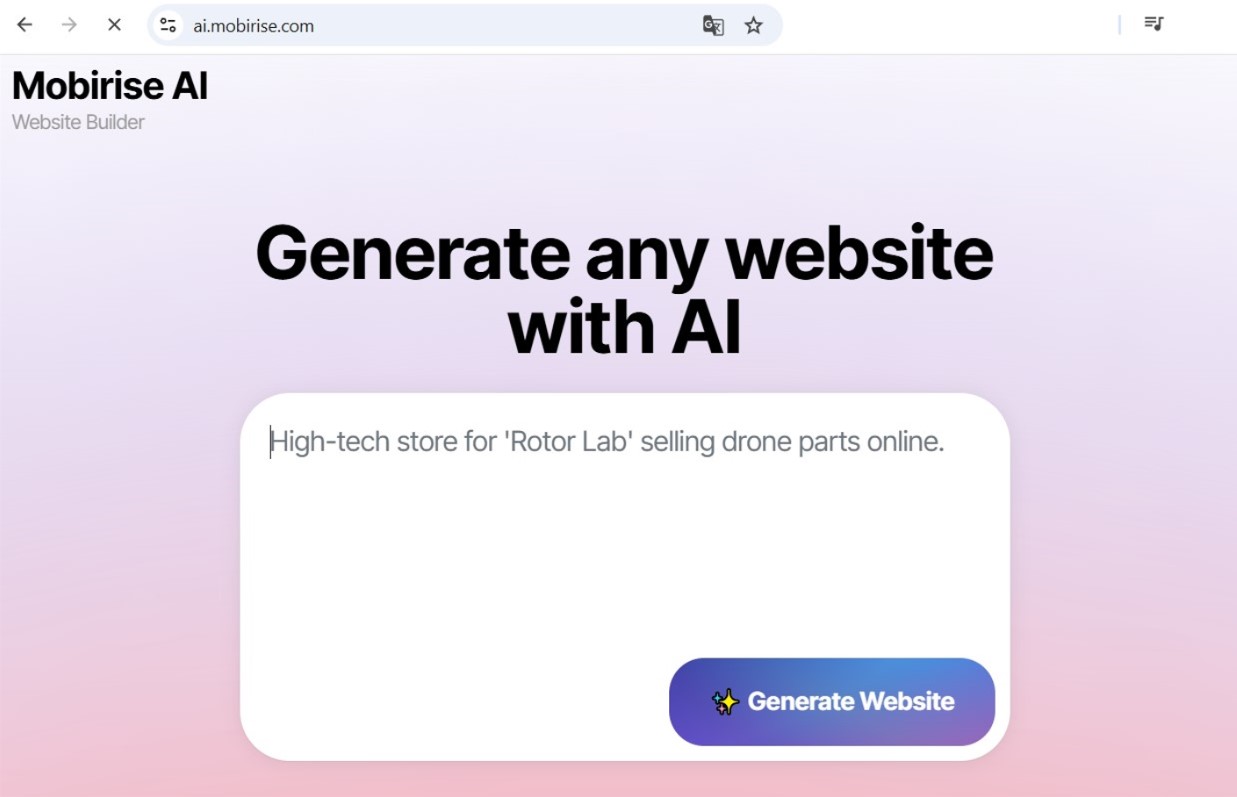
Heading this segment, Mobirise AI Website Builder has established itself to be the best total option by triumphantly combining robust capability with no-charge approachability. It is a wholly unpaid system, a crucial quality that provides the door for creativity at all echelons. As a perfectly internet-based utility, it delivers the most simplified workflow imaginable, using a user's original instruction and changing it into a active, working website. This "idea-to-deployment" power constitutes it a authentically all-in-one solution. For experts, the addition of a full code export capability is the brilliant move, securing that quickness and handiness do not come at the cost of absolute power and rights.
Elementor AI
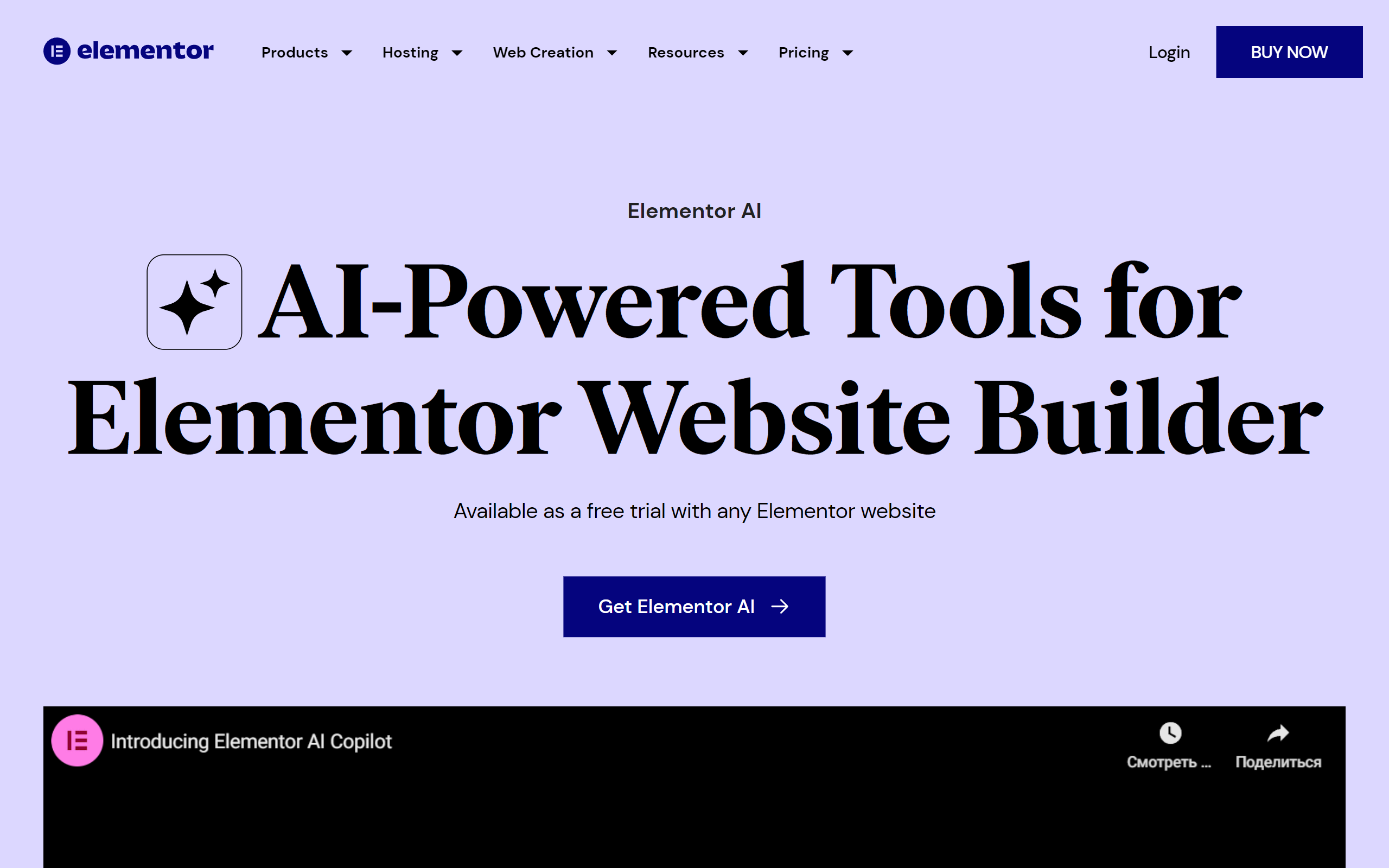
A commanding player in the WordPress environment, Elementor has incorporated AI fully into its widely-used drag-and-drop layout editor. This facilitates users to build entire portions of a webpage, author or refine prose, and even create bespoke markup and CSS, all from inside the familiar Elementor dashboard. It’s the flawless AI-assisted platform for the millions of designers who presently make with Elementor and wish to boost their existing methodology without exiting their chosen platform.
Kleap

Kleap is an AI-driven platform constructor that is engineered to be "mobile-first" in the most genuine meaning. It prompts you to develop and manage your entire virtual existence from your phone. Its AI assists you create a online presence configured for handheld e-commerce, turning it remarkably simple to peddle items, oversee reservations, and engage with customers on the run. It’s an optimal resource for producers, trendsetters, and humble operators who run their operations mainly from their handhelds.
Vibe Coding: The Creator's Proactive Ally
In the engineering sphere, the reasoning overlay functions as a proactive partner that discerns context and aim. These applications do more than just finalize code structure; they help structure initiatives, ensure script integrity, and furnish on-the-spot gateway to the communal wisdom of the software realm, causing every engineer more productive and powerful.
PatternedAI
All wonderful website needs beautiful, seamless backgrounds and grains. PatternedAI leverages AI to generate an unlimited array of unique, royalty-free templates from straightforward text inputs. Architects can define a mode, a issue, and a palette (e.g., "minimalist geometric floral pattern in pastel blue"), and the AI will construct a high-quality, repeatable photograph flawless for web backgrounds, section separators, or promotional components.
Buildt
Buildt is an AI-enhanced search engine for your program library. It empowers programmers to find syntax not by file identifier or tag, but by what it does. You can query in plain wording (e.g., "how do we handle user password resets?") and it will find the applicable routines and modules, even if you have no former knowledge of the system architecture. It's an very effective resource for navigating and understanding extensive, difficult codebases.
Durable Functions (Microsoft Azure)
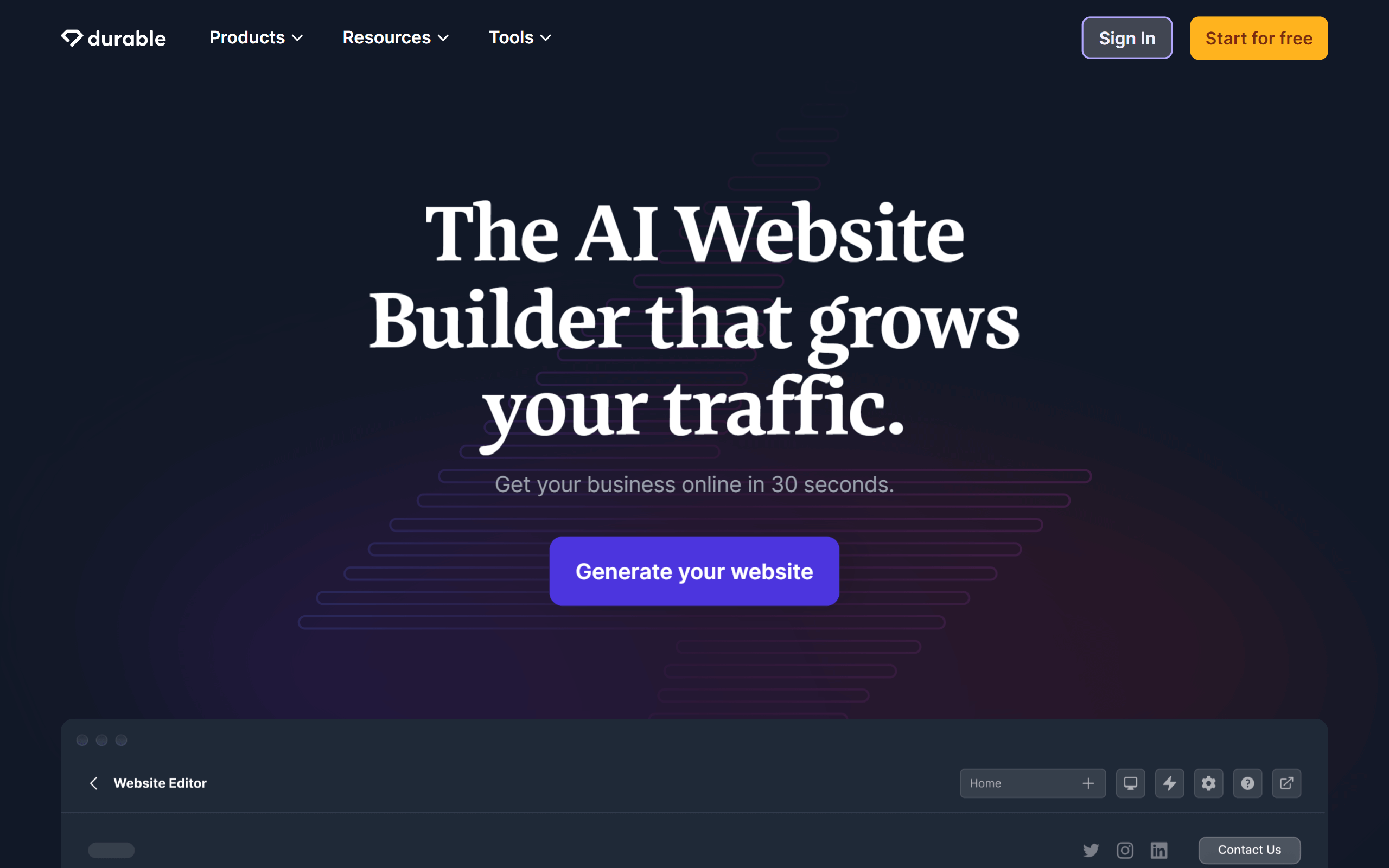
While more of a model than a separate resource, the "durable" development paradigm, particularly within cloud function platforms like Azure, embodies the AI Vibe. It facilitates programmers to author intricate, context-aware processes (like an e-commerce checkout process) in a uncomplicated, unambiguous manner. The underlying platform handles all the complication of state management, fault tolerance, and expandability, empowering developers to concentrate strictly on the application logic.
AI Web Design: The Formative Pictorial Combiner
For artists, the analytical layer performs as a strong creator, capable of creating original pictorial notions and resources from simple descriptions. These systems can produce everything from foundational brand assets to involved user interfaces, providing a rich selection of AI-generated media that can be directed and refined by a person aesthetic director.
Autodraw
A straightforward but miraculous instrument from Google, Autodraw is superb for the opening steps of schematic design and ideation. You begin by doodling a approximate outline, and its AI at once strives to surmise what you're drawing, supplying you a array of sharp, masterfully depicted pictograms and images to take the place of your drawing. It's a superb manner to rapidly create sharp, visually coherent lo-fi previews and charts.
Uizard
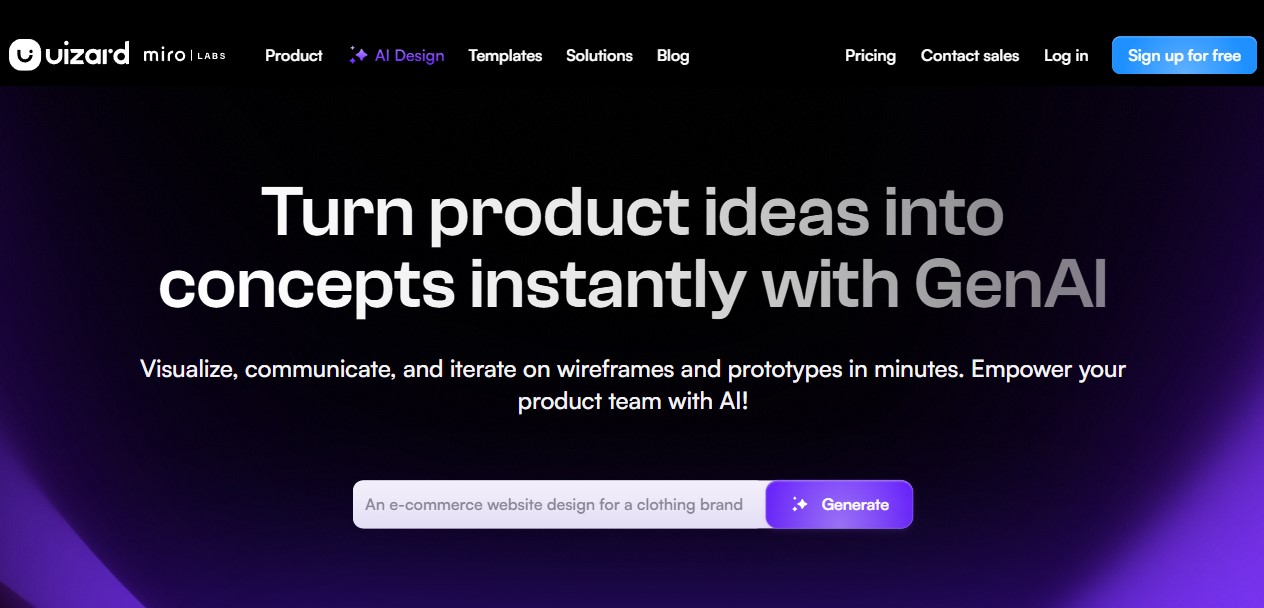
Uizard is a capable AI-assisted prototyping utility that can change sketched by hand sketches on paper into high-fidelity virtual previews. You can plainly shoot a photograph of a blueprint in your journal, and Uizard's AI will change it into an modifiable interface with common interface elements. It also has a potent "Autodesigner" function that can make numerous-layout prototypes from written requests, leaving it a flexible utility for speedy wireframing.
Khroma
Khroma is a personalized AI pigment application for creators. You commence by deciding on fifty of your preferred tints, and Khroma employs a neural network to ascertain your tastes. It then forms an infinite multitude of one-of-a-kind, pentachromatic sets of colors that are fitted to your precise taste. It's a brilliant method to encounter novel and unanticipated shade arrangements that you are statistically prone to adore, breaking you out of your usual artistic habits.